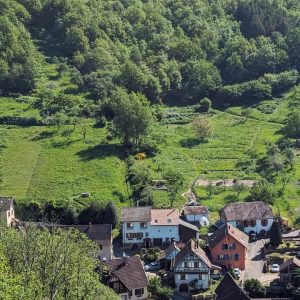
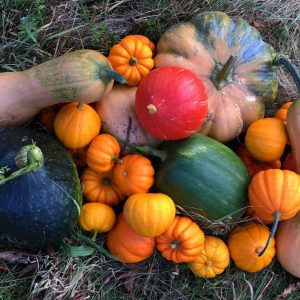
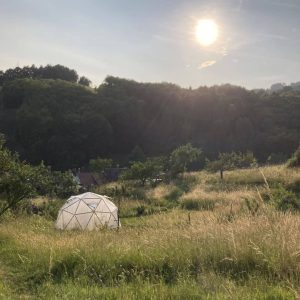
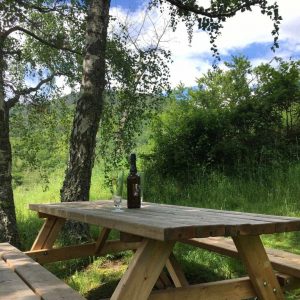
The gardens stretch uphill towards the forest of Maisonsgoutte. Back in the day this south facing slope was used for wine cultivation. When we bought it in 2022 it was all grassland and bramble. Nowadays there are terraces, an annual vegetable garden, a dome greenhouse, chickens and a food forest in development. We kept some of the wild blackberries because it has many upsides and serves multiple purposes. Like so many things in our garden. It is one of the key principles in permaculture design.
Permaculture comes from the Latin words ‘Permanens’, to persist indefinitely and ‘cultura’ the cultivation of land/intellect, now understood as the practices that support human societies. These words together mean a persistent system that supports human existence. It was first introduced by Bill Mollison in the 70s as a response to industrialized agricultural methods. Inspired by Australian nature and ancient cultures, he aimed to create an agricultural system that was as diverse, stable and resilient as the natural ecosystems.
‘A system of design that provides all of the needs for humanity in a way that benefits the environment’
Geoff Lawton
Permaculture is a holistic, teachable, design process based on 3 ethics and 12 principles. It tries to mimic the patterns and relationships that we find in nature in order to build that resilient ecosystem. Permaculture derives from agriculture, but its system thinking involves more than that. It also concerns housing, community, technology and local economy.
A revolution disguised as gardening
The 3 ethics – Earth Care, People Care and Fair Share – are the foundation of permaculture. It is a way of life, it is about becoming a producer (and not only a consumer), giving Earth a saying in decision making, working with Nature and not against it, living sustainably in communities, sharing surplus and supplying our needs without destroying Earth.
Permaculture is a movement that believes that we can have abundance for all, without harming the nature around us. This sounds maybe radical but a revolution needs radical thinking, don’t you think? At this moment, the human population on Earth needs (or thinks that it needs) more than there is to give. So, we asked ourselves the question, back in 2020, what do we need? With this, our journey started. Deconstruction of what we believed we needed, and finding out what we actually needed. We will give away the ending: it was a house and land in Maisonsgoutte!
Earth Care, People Care and Fair Share
We need a living and thriving planet: healthy soil, animals and plants (in many shapes and forms), clean water and fresh air. We are social creatures in search of a meaningful existence in resilient communities. We share with Earth and others. Shaping our activities around these ethics is what we try to do and what we teach. It starts with a good design. And a good design starts with understanding these ethics, observation, patience and putting in place the 12 principles that support the 3 ethics.
In our permaculture workshops we start with the basis of permaculture design; the importance of the holistic view and the ethics. We also give plenty of practical guidelines to start your journey. We organize two weekends in 2026 inFrench. For a group of 4-8 people, we can organise the weekend in English on request.
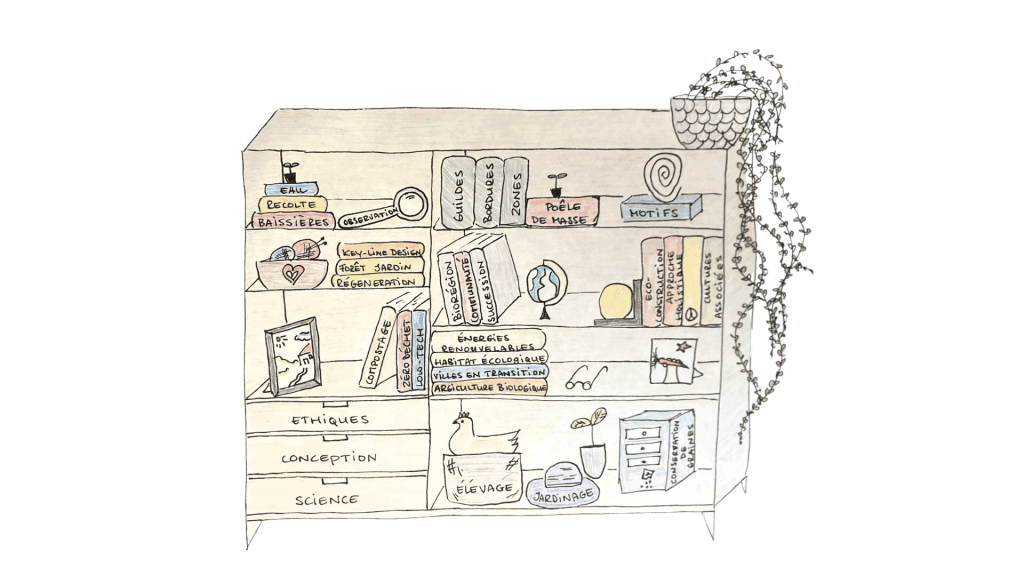
Permaculture can be seen as a bookcase, you can place items from other sustainable disciplines and technologies inside. As long as they follow the ethics of permaculture.